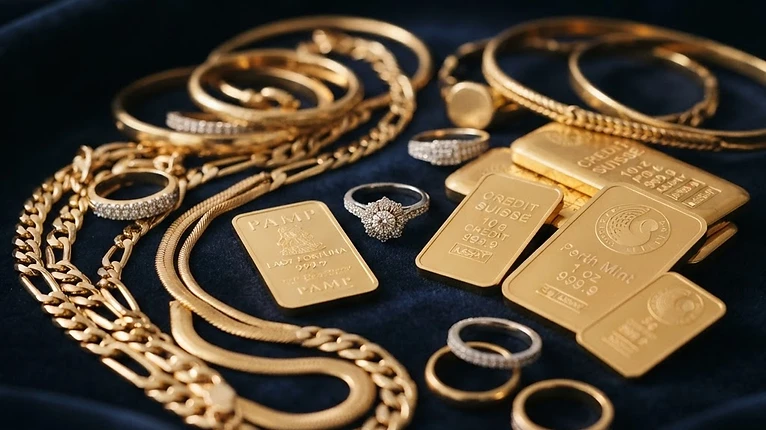
Gold purity is measured in karats (not to be confused with carats, which measure diamond weight). Here's what each common karat means.
24K Gold — 99.9% Pure
24K gold is the purest form of gold available. It's a rich, deep yellow color and is relatively soft. 24K gold is commonly found in coins, bullion, and some cultural jewelry (particularly South Asian and Middle Eastern designs). Because it's soft, it's less common in everyday jewelry.
22K Gold — 91.6% Pure
22K gold is popular in South Asian jewelry. It has a warm yellow color and is slightly harder than 24K. The small amount of alloy metal makes it more durable while retaining high gold content.
18K Gold — 75% Pure
18K gold is 75% gold and 25% alloy metals. It's a popular choice for fine jewelry — it has a rich color, good durability, and high gold content. Many luxury brands use 18K gold. It's stamped "18K" or "750".
14K Gold — 58.3% Pure
14K gold is the most common karat in the United States. It's 58.3% gold and 41.7% alloy, making it durable enough for everyday wear while still containing a significant amount of gold. It's stamped "14K" or "585".
10K Gold — 41.7% Pure
10K gold is the minimum purity that can legally be sold as gold in the United States. It's 41.7% gold, making it the most durable and affordable option. It's stamped "10K" or "417".
How Karat Affects Value
The higher the karat, the more pure gold your item contains, and the more it's worth per gram. When you sell gold, the buyer tests the purity and calculates the offer based on the actual gold content.
How to Identify Your Gold's Karat
Look for stamps on your jewelry. Common locations include the inside of rings, the clasp of chains, and the post of earrings. If you can't find a stamp, a professional buyer can test the purity for you.
Last updated: July 1, 2026