Key Takeaways
- A pawn loan is a secured loan: you leave collateral, keep ownership, and repay to get the item back.
- Selling is a one-time transaction with no repayment; pawning costs interest but preserves the item.
- Bring photo ID and proof of ownership where you have it, such as a receipt, appraisal, or box and papers.
- Ask for the loan amount, the interest rate, the term length, and the total payoff before you sign.
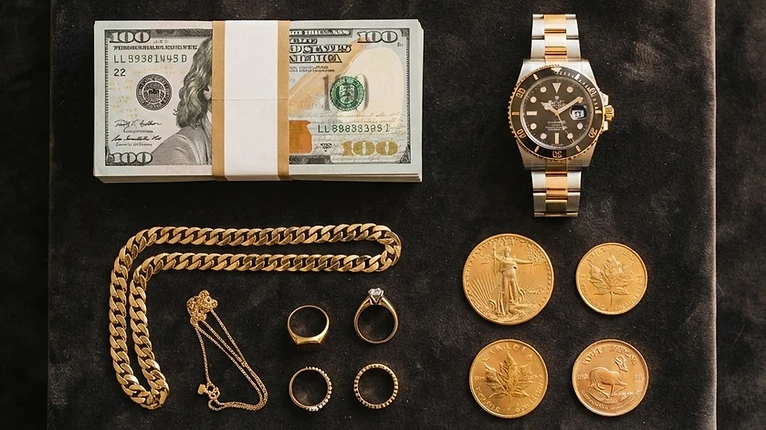
A pawn loan lets you borrow cash against something you own without selling it. In Queens, most pawn loans are written against gold jewelry, diamond pieces, and luxury watches because those items hold value that can be verified quickly. Here is how the process works from start to finish.
Pawning versus selling: the core difference
When you sell, the item is gone and the transaction is finished. When you pawn, you keep legal ownership, the shop holds the item as collateral, and you repay the loan plus agreed charges to get it back. Pawning costs more overall, but it preserves an heirloom, a wedding ring, or a watch you intend to keep.
If you have no intention of redeeming the item, selling outright almost always nets more money than pawning and then defaulting. Ask the shop to quote both so you can compare honestly.

How the loan amount is set
The pawnbroker tests the metal, weighs it, and checks any stones, then calculates a liquidation value — what the item would realistically bring if it had to be sold quickly. The loan is a percentage of that figure. Watches are valued on reference, condition, and completeness rather than weight.
Because the shop must store, insure, and eventually resell the item if you default, the loan is deliberately conservative. A higher loan is not automatically a better deal if the term and rate are worse.
What you need to bring
Bring the item, a valid government-issued photo ID, and anything that supports ownership or value: a purchase receipt, an appraisal, a GIA certificate for a diamond, or the box and papers for a watch. Proof of ownership is not always required by law, but it speeds up the process and can improve the offer.
Bring every accessory you have. A Rolex with its card, box, and links supports a stronger loan than a bare watch, because the shop can resell it more easily if needed.
Questions to ask before you sign
Ask four things: the loan amount, the interest and fees expressed as a total cost, the length of the term, and the exact payoff date and amount. Get the terms in writing. A shop that rushes you past those questions is not one to borrow from.
Also ask what happens at the end of the term if you need more time. Reputable pawnbrokers explain renewal and redemption clearly instead of letting a loan quietly expire.
Serving Queens customers
Our store at 90-23 63rd Dr Ste 1 works with customers from Forest Hills, Rego Park, Flushing, Astoria, Jackson Heights, Elmhurst, Corona, Bayside, Jamaica, Kew Gardens, Woodside, Ridgewood, and Long Island City. Walk in with your item and ID for a free, confidential evaluation.
Learn more on our pawn services page, or read pawn shop versus jewelry buyer if you are deciding which route fits your situation. Call (929) 693-0335 with questions before you come in.
Last updated: November 22, 2026